The Irish Pub
A pint-rating platform for finding the best Guinness in Ireland — scored by locals, not tourists.
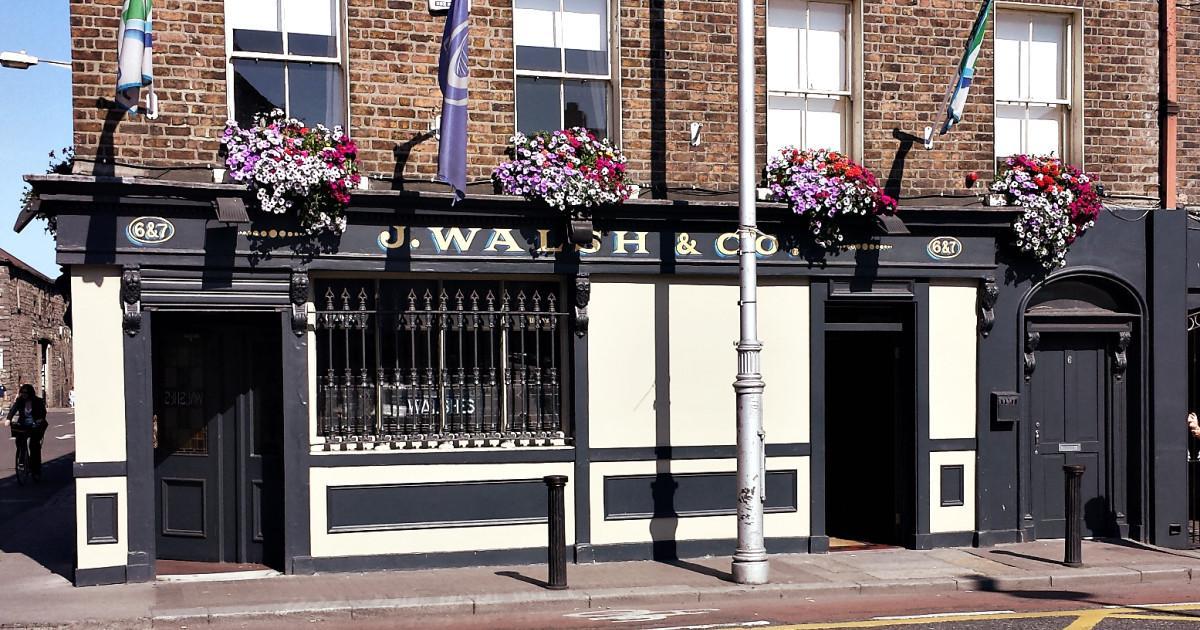
Most "best pubs in Dublin" content online is written for tourists by people who've never had a session in the place. The Irish Pub is a discovery platform built the other way round: pints rated by regulars, pubs found by what's actually happening in them tonight, not by which ones paid for a listing.
The brief
The brief was to build something that felt like insider knowledge, not a directory. That meant a rating system specific enough to be useful — not just stars, but the actual dimensions that make a pint good or bad — and a way to browse pubs by what a visitor is actually looking for: a great Guinness, a trad session tonight, food, or a match on the telly.
What I built
Every pint is scored on presentation, texture, and taste, each out of 10, converted to a 0–5 pint scale. Reviews come from patrons, not an algorithm.
Browse by county and city, or filter straight to "Great Guinness," "Trad tonight," "Does food," or "Sports" — built for the specific question a visitor actually has.
A Mapbox map of every pub in the directory, clustering into pin counts by area and filtering live, built for on-the-go use rather than desktop browsing.
Region guides for Dublin, Cork, and Galway, plus themed routes like pubs near Croke Park and the Wild Atlantic Way.
A swipe-through rating flow — pick an area, drag the pint to score it — that keeps the data crowd-sourced and current rather than a fixed editorial list.
In the wild
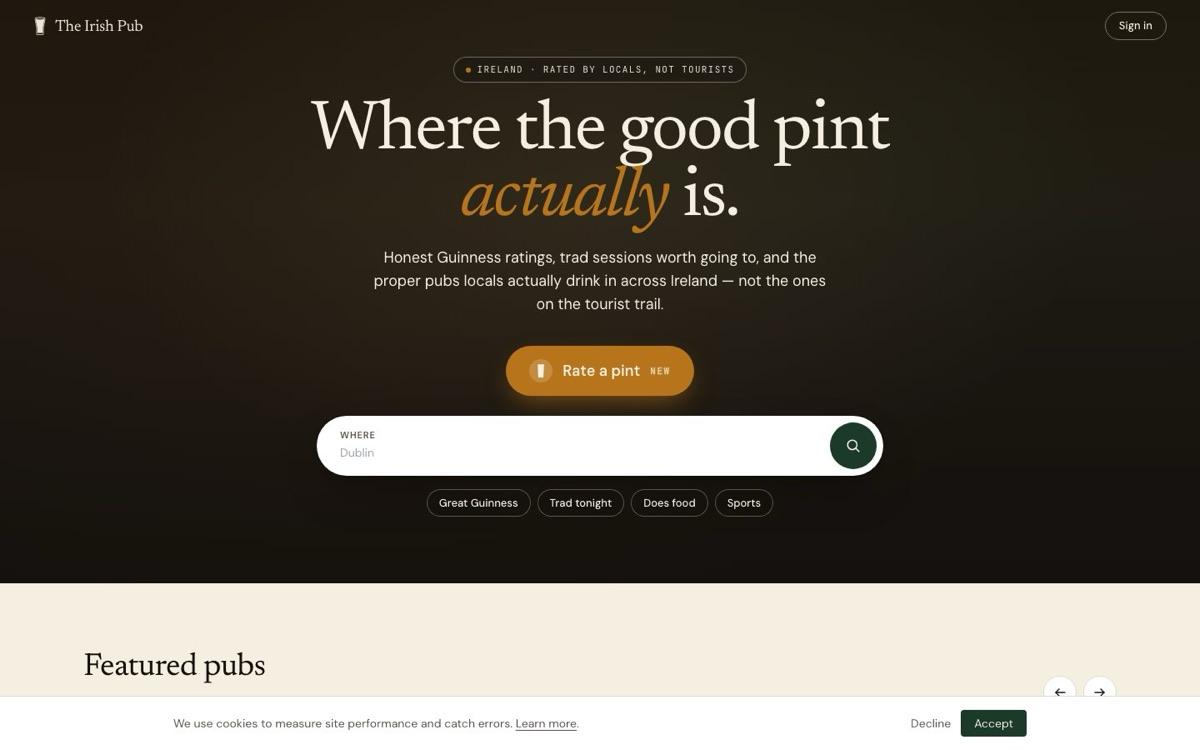
Landing page
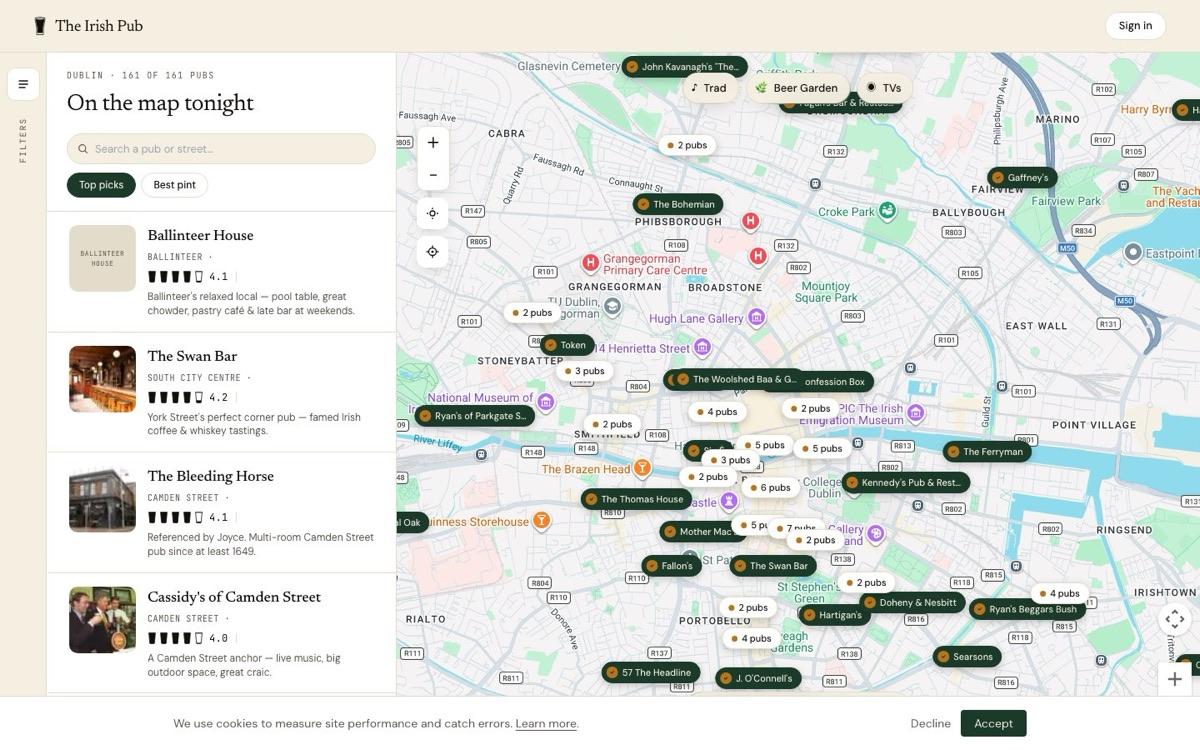
Interactive pub map with live clustering
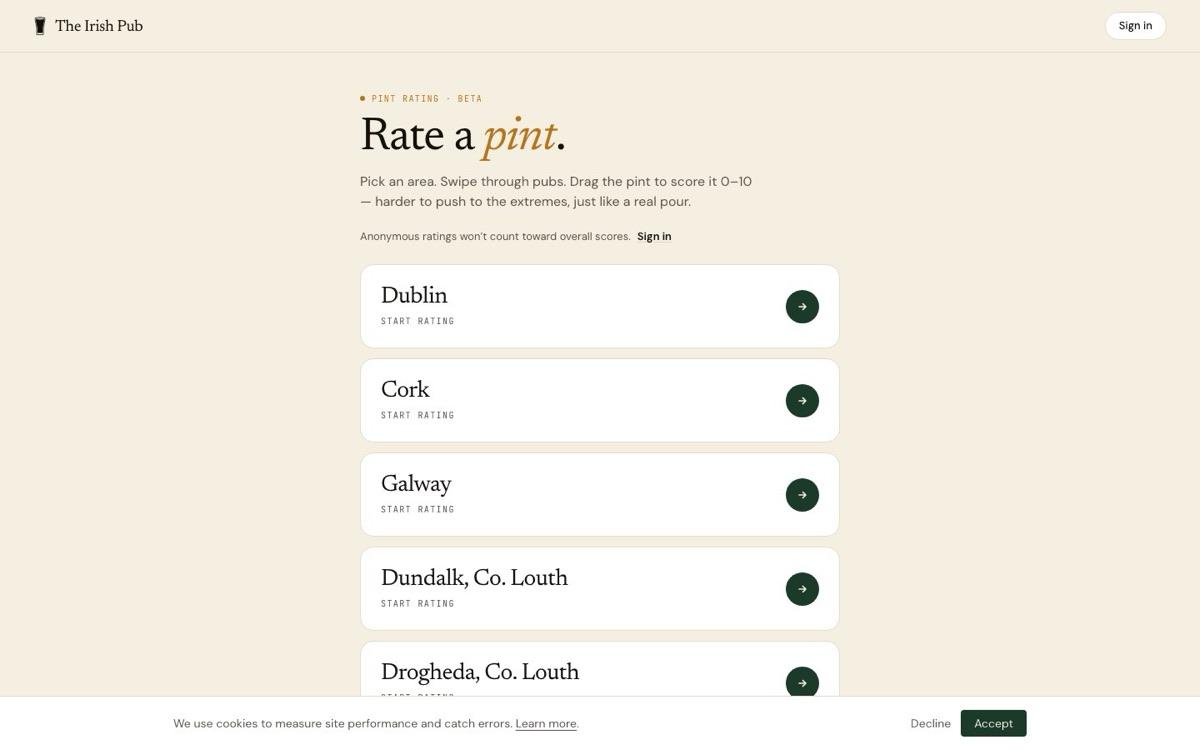
The pint rating flow
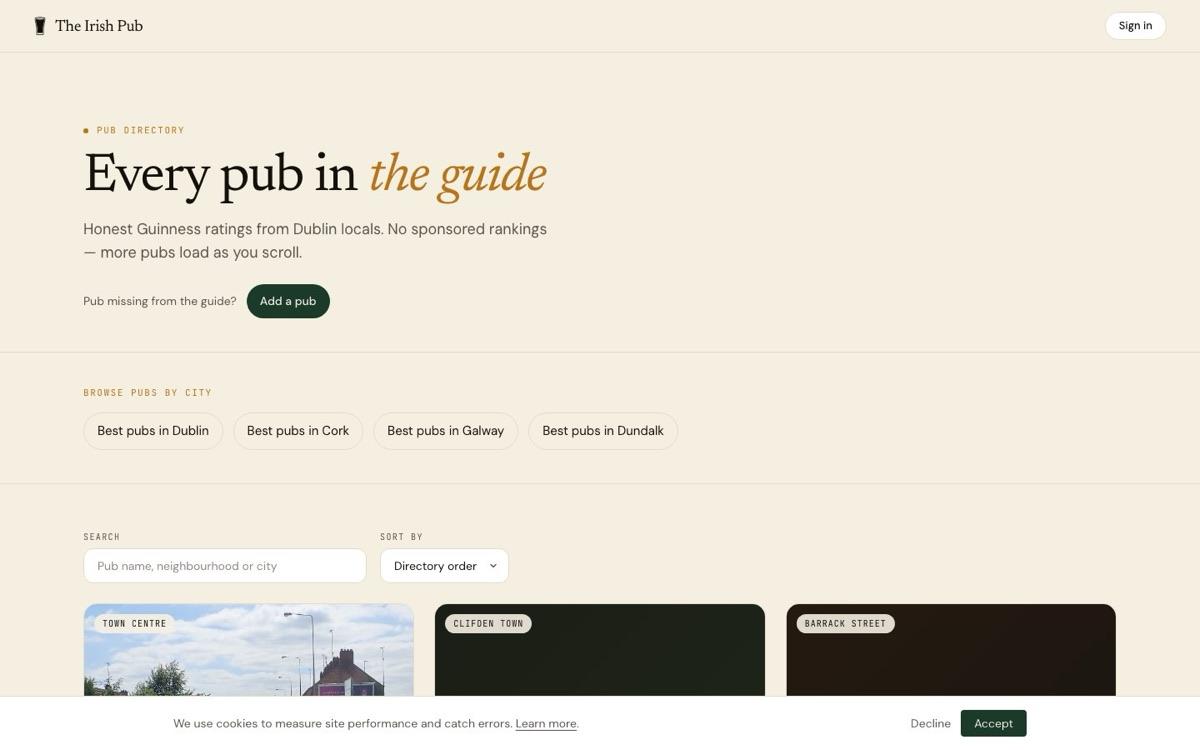
Pub directory
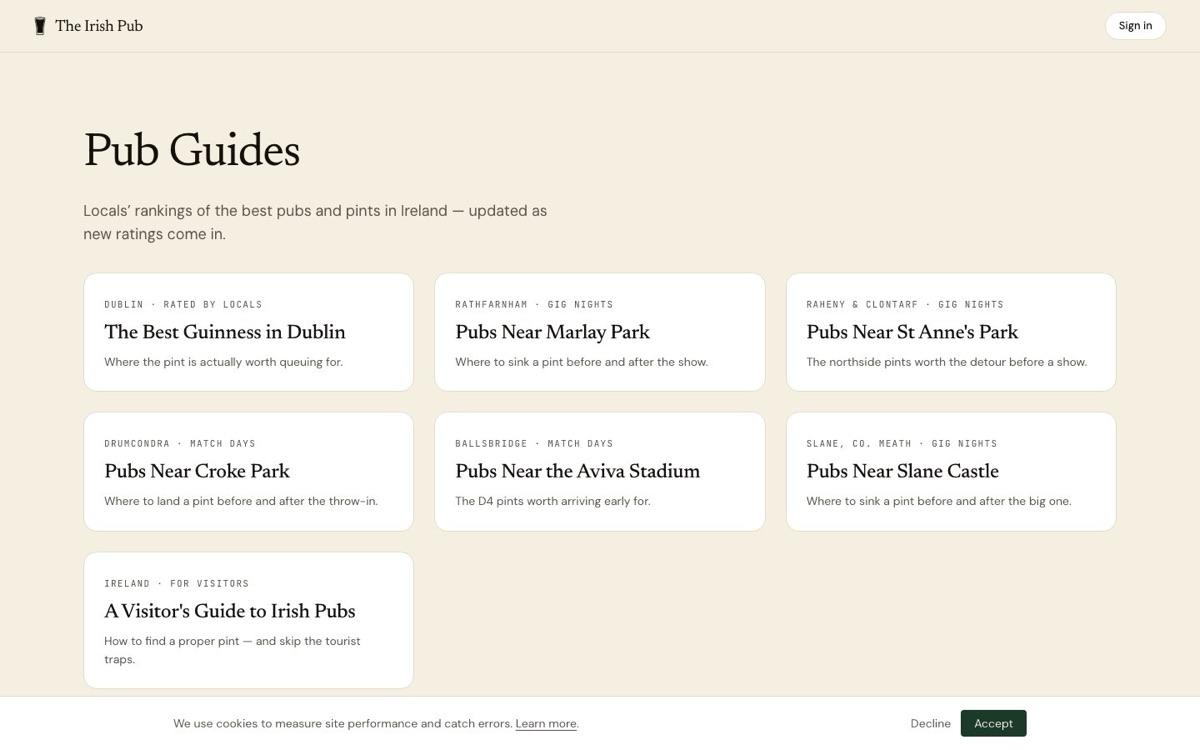
Local & thematic guides
How it’s actually built
Cognito handles auth (with an admin-only group gating the internal panel), AppSync serves a GraphQL API backed by DynamoDB, S3 stores pub photos, and a Lambda resolver powers custom queries like tonight's events and the ratings leaderboard.
The GraphQL schema is the single source of truth; codegen generates typed operations from it, so a backend schema change surfaces as a compile error in the frontend rather than a runtime bug.
Every data-fetching function falls back to realistic mock data when no AppSync endpoint is set, so the full UI runs and is demoable from a clean checkout with no cloud infrastructure behind it.
Pins cluster client-side so the map stays smooth with hundreds of pubs plotted across the country at once, re-clustering live as filters change.
Pub data is ingested from OpenStreetMap for location and opening hours, enriched with photos, and run through custom scripts for geocoding correction and duplicate detection — not a hand-typed listing.
A single region-hub config (e.g. the Wild Atlantic Way spans six counties) drives multi-county landing pages without duplicating logic per region, backed by per-pub JSON-LD and custom OG images.
Approach
Built mobile-first, since pub-finding is overwhelmingly an on-the-go, one-handed decision — someone standing on a street in Temple Bar, not sitting at a desk. The voice and design lean conversational and a little irreverent on purpose: "rated by locals, not tourists" only works if the whole site backs it up, so the copy, the guides, and the rating criteria all avoid the generic travel-blog tone that the site exists to push back against.
Outcome
Live at theirishpub.ie, actively collecting pint ratings across a directory of pubs covering Dublin, Cork, Galway, and beyond, with region hubs and themed guides live at launch.